layerx command-line tool
Manage keys, send payments, publish programs and run agents without writing client code. Every command can emit JSON, and credentials go to your operating system keyring or an encrypted file.

Developer tooling
A command-line tool, a local emulator and a disposable cluster, all running on your machine before you touch a live endpoint.
The kit
Wallets, tokens, programs, a local network, contract tests and load tools, built to exercise the same path the network uses.
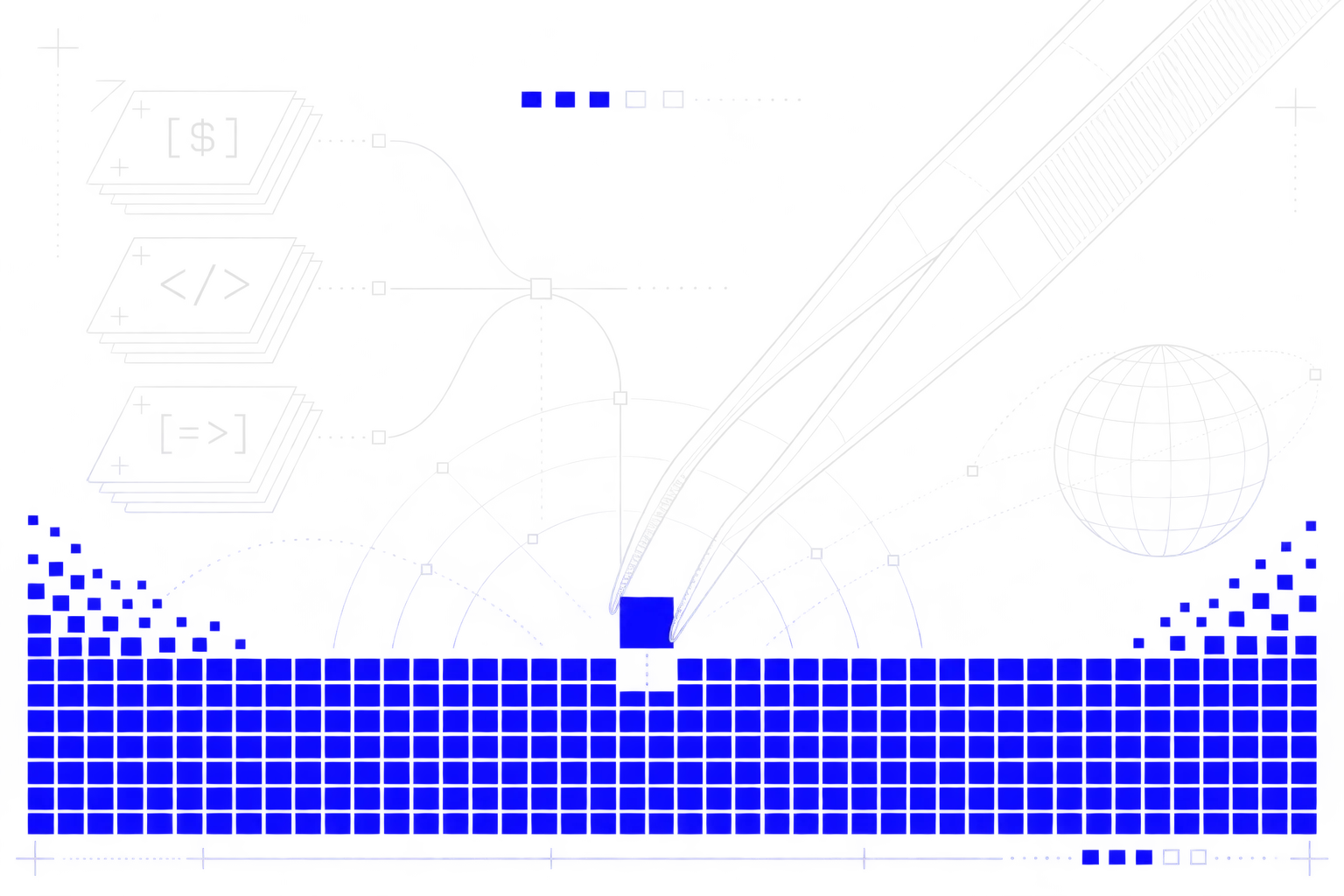
Manage keys, send payments, publish programs and run agents without writing client code. Every command can emit JSON, and credentials go to your operating system keyring or an encrypted file.
A local network for offline or fast iteration. It wraps the native kernel core, listens on loopback port 9402 with local network ID 402, and refuses any other address.
Compile Rust programs to WASM and apply the deterministic runtime policy on your machine, so a program the network would reject fails early. Typed bindings come from a verified published interface.
A small separate tool that reads state and submits signed EIP-1559 transactions. It prints a receipted result only when the receipt signature verifies.
Start four Paxeer X nodes with Docker Compose to test consensus, upgrades and operations on real node code, with optional Prometheus and Grafana monitoring.
Foundry for Solidity, Hardhat for JavaScript, and YAML scenarios driven by Go and Python cover EVM behavior, precompiles, governance, staking, upgrades and state sync.
Sign EVM traffic, track receipts and blocks, and fail a run that misses the throughput, p99 latency or accepted-transaction limits you set.
A working session
One terminal, three stops. Each stop uses the real tool, and each one checks the result before it moves on.
Three stops
Start the emulator on loopback port 9402 with network ID 402, prefund accounts, set the clock and snapshot state to test time-dependent logic.
Bring up the four-node stack. A node only announces readiness after it reports the expected chain, a positive block height and finished catch-up.
Run paxload against the node endpoints. It checks each endpoint's chain ID first, then writes a JSON report and fails if your limits are missed.
402 is a local test identifier. The mainnet-beta EVM chain ID is 125.
Verification
Three habits are built into the tooling so a wrong endpoint or a bad receipt shows up as a plain refusal.
layerxctl checks each receipt against a pinned receipt key and, for HTTPS, a pinned root certificate. If verification fails, it reports the transaction as submitted instead of confirmed.
The emulator refuses to listen on anything but loopback. Its network ID of 402 is a local test identifier, not the mainnet-beta chain ID of 125.
The load tools check the chain ID of every endpoint before sending a transaction, and the benchmark node manager refuses to start on a live EVM chain ID.
Write commands in the CLI require an explicit receipt policy and fee limit, so you decide what proof counts as success.

Local cluster
A coordinator creates a fresh run directory, snapshots the node binary, writes genesis and keeps logs, so every run starts clean.
A node announces readiness only after it reports the expected chain, a positive block height and finished catch-up. Overlays add Prometheus and Grafana, or a mixed mode with Giga and optimistic concurrency on one node.
Orientation
A static codebase map and a searchable documentation site, each saying only what it can show.
The codebase map joins the Git file inventory with symbols and call edges from the code index and tasks from the active specification. It has views for systems, imports, routes and delivery waves, and shows static relationships only.
The documentation site has about ninety pages with full-text search and Markdown exports. A companion assistant answers from the site and cites the sections it used. Chat history stays in your browser session and is not stored on the server.

Next step
Start from the docs, build with the SDKs, or run the cluster on your own hardware.