An agent walletwith hard limits.
LayerX is the agent domain of Paxeer X. It gives software a wallet with limits a person sets, lets it pay inside the HTTP request, and returns a signed receipt for every activity.
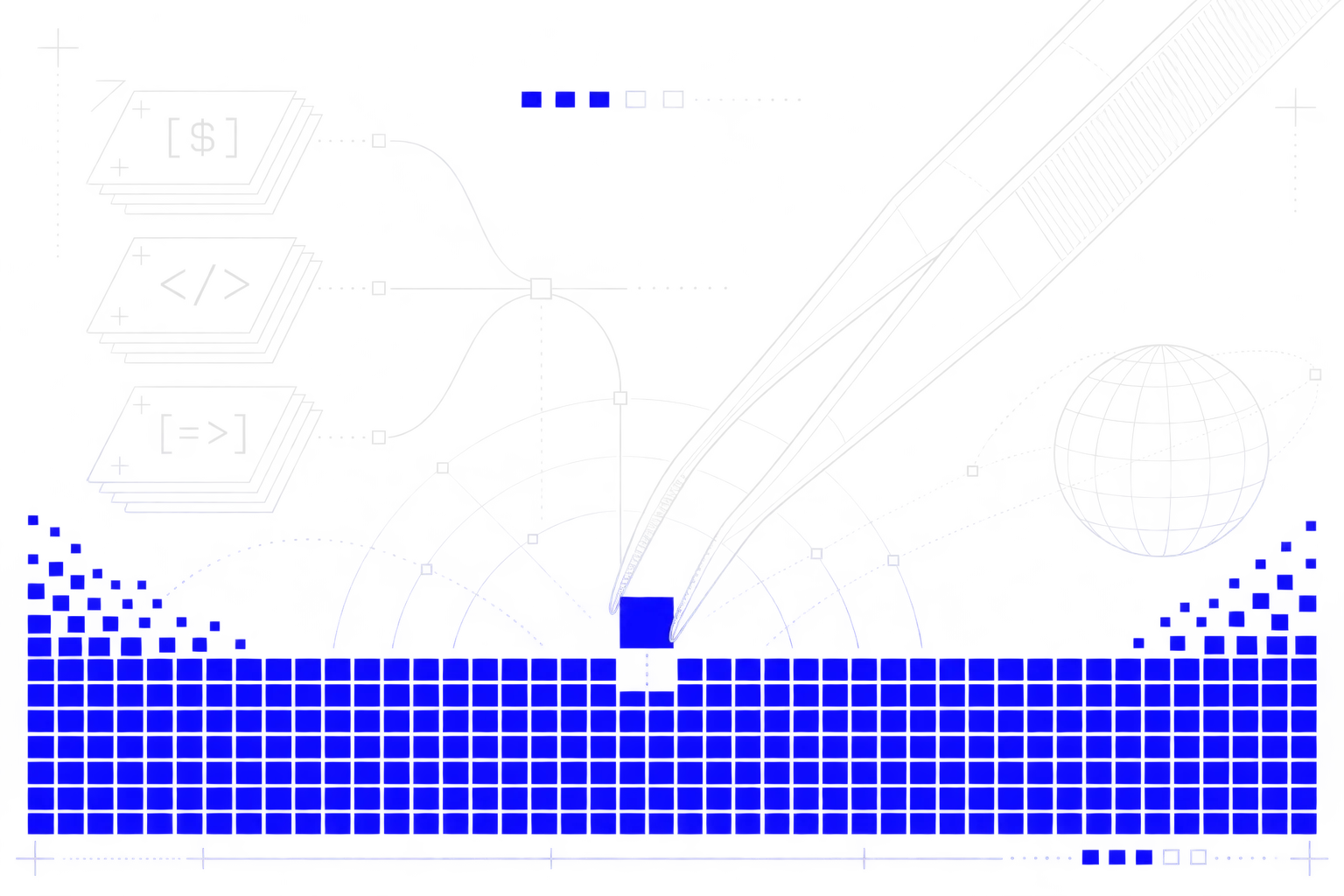
Payment travels inside the request.
No account to open and no invoice to chase. A paid endpoint names its price, the agent pays under its grant, and the handler runs once the receipt verifies.
01Service
HTTP/1.1 402 Payment Required
PAYMENT-REQUIRED:
scheme exact
network layerx:<id>
commitment executed
02Agent
GET /v1/report HTTP/1.1
PAYMENT-SIGNATURE:
offer unchanged
payload LayerX receipt
key idempotent
03Service
HTTP/1.1 200 OK
PAYMENT-RESPONSE:
settlement lxp:<receipt digest>
The service names a price
The offer lists the asset, amount, recipient and the evidence it needs. The buyer may not substitute any of them.
The agent pays under its grant
The buyer middleware checks the offer against the grant and budget, then retries with the payment attached.
The answer comes back with proof
The seller verifies the receipt against the offer it issued before it releases anything.
Three schemes: exact per call, metered draws against a grant, and subscription renewals. A retry with the same idempotency key returns the first receipt, never a second charge.
The agent holds a grant, never your key.
Every activity runs under a grant that says exactly what the holding key may do. The LayerX kernel checks it before any money moves.
- Scope
- Which modules, which activities and which asset the key may touch.
- Caps
- How much per activity, per period and in total.
- Window
- The two timestamps between which the grant is live.
- Amendment
- Only to a strictly narrower grant. Any widening is refused.
- Revocation
- Revoke one grant, or bump the revocation sequence to void every grant at once.
Refused, with a reason.
A spend outside the rules does not settle. The kernel answers with a code your agent can act on.
- -713
- BUDGET_ALLOWANCE_EXCEEDED
- The spend would cross the period cap.
- -714
- INSUFFICIENT_BUDGET_FUNDS
- The budget holds less than the spend.
- -715
- UNAUTHORIZED_DELEGATE
- The spender is not the owner or a named delegate.
- -716
- BUDGET_REVOKED
- The owner closed or revoked the budget.
- -202
- AUTH_EXPIRED
- The key is outside its validity window.
- -204
- AUTH_SCOPE
- The activity is outside what the grant allows.
- -217
- INVOICE_ALREADY_SETTLED
- A second payment against an invoice that already settled.
Beyond single payments.
Holds, streams and markets are modules of the LayerX kernel. They settle through the same transfer primitive as every other activity.

Escrow holds
Hold funds for a named beneficiary with an expiry and a dispute window. Capture all or part. Only the named arbiter resolves a dispute.
Payment streams
Pay by elapsed time or by cumulative readings from a signed meter. Either side can settle, and closing refunds what was not earned.
Perpetual and spot markets
Perpetual futures and a spot order book, priced by signed oracle observations. A stale or deviant price halts the market.
What builders ask about LayerX.
LayerX is one of the two execution domains of Paxeer X. It has no token of its own.

Is LayerX a separate blockchain?
No. LayerX is one of the two execution domains of Paxeer X. It runs agent activity in its own deterministic runtime and settles checkpoints on the Paxeer X chain, which holds custody. One network, one account across both.
Is there a LayerX token?
No. PAX is the native gas and settlement asset of Paxeer X. LayerX is the agent domain inside the network, not a separate asset or company.
Who enforces the limits?
The LayerX kernel. Budgets and grants are checked on the settlement path for every activity, so a limit holds even when the agent’s code, prompt or key is compromised. Rules an app enforces locally are labelled as app-enforced, never passed off as protocol guarantees.
How do I stop an agent?
Revoke its grant, or bump the identity’s revocation sequence to void every grant issued under it at once. The next activity the agent tries is refused. Closing a budget returns whatever is left to the account that funded it.
Does LayerX work with x402?
Yes. The payment middleware follows the x402 version 2 wire contract. A service answers HTTP 402, the buyer pays inside the request, and the handler runs once a verified receipt binds payer, payee, asset and amount to the offer.
Can agents built on other frameworks use LayerX?
Yes. An MCP server exposes scoped tools to model agents, A2A serves agent-to-agent calls, and TypeScript adapters cover the OpenAI and Anthropic SDKs, LangChain and the Vercel AI SDK. Every tool call passes the same policy and budget gates.
What stands behind a receipt before settlement?
First the sequencer’s signature, then guarantor attestations backed by slashable bonds, then the checkpoint on the Paxeer X chain with its challenge window. There is no validity proof. Each stage names who is liable if its claim turns out to be wrong.
Ship the agent this week.
Create a wallet, set its limits and settle a first paid request with the SDK in your language.