Native ledger
Every balance is keptby the chain itself
PAX and every native asset live in a ledger built into the node. The chain enforces the rules, not token code you would have to audit.
Chain ID 125
First claim
Issuance, supply and transfer rules belong to the node
A token here is chain state, not a contract someone deployed. Issuers create, cap, mint, burn and pause an asset without deploying contract code.
- Chain state
- Balances, supply and metadata are chain state any wallet, contract or service can read.
- Two views, one answer
- The ledger mirrors every kernel transfer into bank balances, so the two views agree.
- Governance pause
- A governance pause can halt ledger activity if needed.

Proof
One record, and anyone can recompute its identifier
Registering an asset takes a symbol, a name, a decimal setting and an optional supply cap. The network returns a permanent identifier.
Asset registry
Symbols run 1 to 16 characters, names 1 to 32, decimals up to 38. A cap of zero means uncapped. Each asset also appears in the bank under its own denomination.
Derived accounts
The same name always produces the same account, from a SHA-256 hash tied to a did:layerx identifier. A service can predict where funds will land before anything exists.
Token creation
Any account can create a token named after its own address and a chosen sub-name, so collisions between accounts cannot happen. The creator becomes admin and can attach an allow list.
Mint and burn
On registration the full issuable amount sits in an issuance account. Minting moves units out, burning returns them. Unrecognized callers are refused, and a paused token refuses both.
Second claim
A payment settles as written, or it is refused
A payment names its payer, recipient, asset, amount, expiry and reference. A stale or duplicated request cannot settle by accident.
Coded refusals
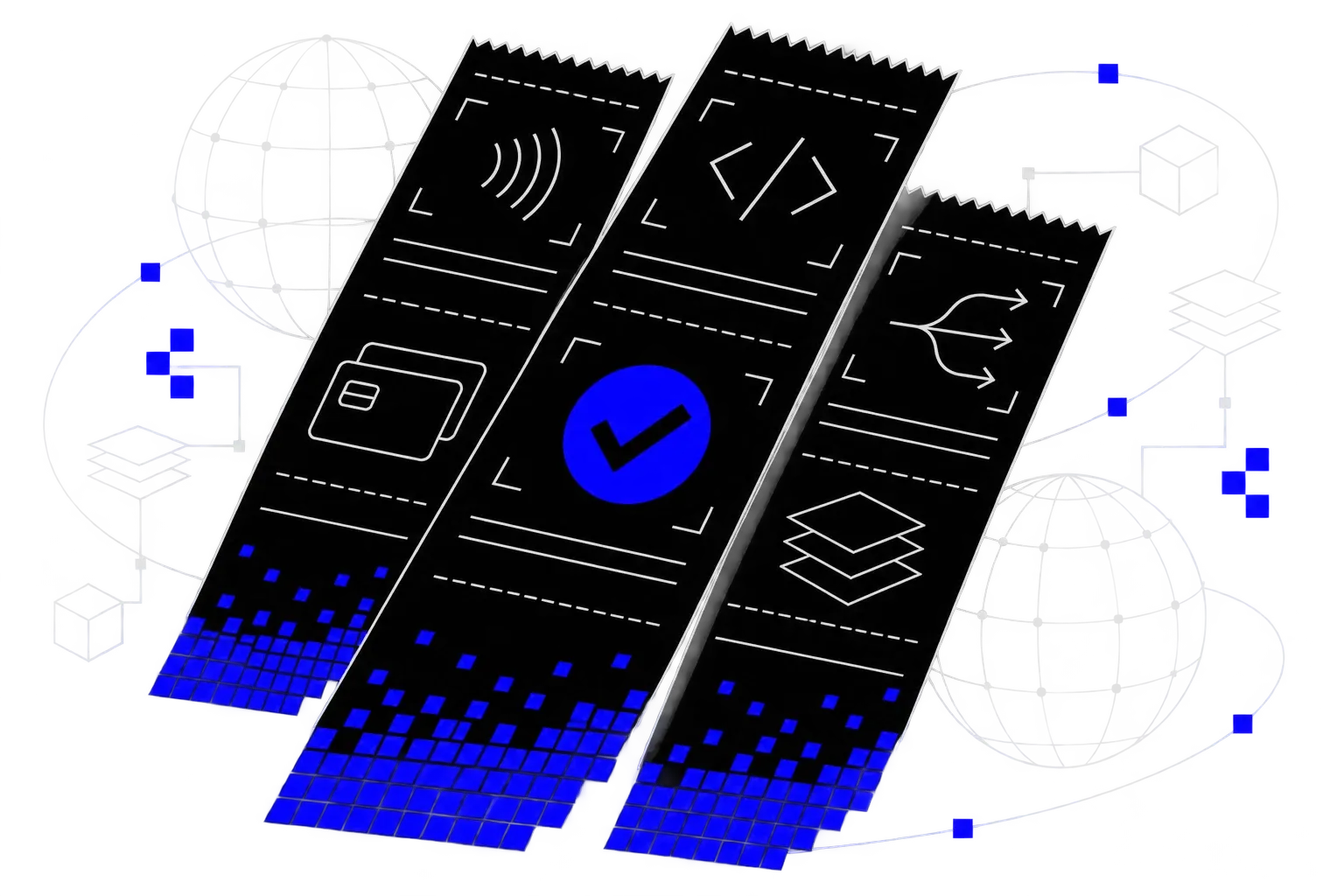
Failures return named reason codes, not generic errors. The caller learns why a payment was turned down, and a wallet or gateway can act on that reason.
Receipts and logs
Each operation produces a signed execution receipt, final once its block is committed. The call also emits an EVM log built from that receipt for wallets, indexers and gateways.
Proof
Either a row, or a named refusal
Watch one exact payment. In range, it becomes a ledger row. Past its expiry, it becomes a coded refusal and the ledger stays as it was.
Valid request
- 0042acct-a → acct-b25 PXTinv-0042
- 0041acct-c → acct-a12 PXTinv-0041
- 0040acct-b → acct-d40 PXTinv-0040
- 0039acct-a → acct-c7 PXTinv-0039
- 0038acct-d → acct-b90 PXTinv-0038
- 0037acct-c → acct-d3 PXTinv-0037
Payment requestSample
- PAYER
- acct-a
- RECIPIENT
- acct-b
- ASSET
- PXT
- AMOUNT
- 25
- REFERENCE
- inv-0042
- EXPIRY (MS)
- 1735689660000
Row written, receipt signed
Expired request
- 0041acct-c → acct-a12 PXTinv-0041
- 0040acct-b → acct-d40 PXTinv-0040
- 0039acct-a → acct-c7 PXTinv-0039
- 0038acct-d → acct-b90 PXTinv-0038
- 0037acct-c → acct-d3 PXTinv-0037
Payment requestSample
- PAYER
- acct-a
- RECIPIENT
- acct-b
- ASSET
- PXT
- AMOUNT
- 25
- REFERENCE
- inv-0042
- EXPIRY (MS)
- 1735689540000
Refused, reason code returned
Bank balances and kernel transfers are updated together.

Third claim
New PAX arrives on a published schedule
PAX is released on a governed daily schedule, so supply changes follow rules written in chain state, not decisions made case by case.
- 125Chain ID
- 1 minuteEpoch length by default
- 18PAX wrapper decimals
Holders and partners can follow PAX supply against the stated schedule.
Proof
From a scheduled release to the fee collector
The mint module splits each scheduled release across its days and sends the result to the fee collector, which pays it out with transaction fees.
Whole-number split
Each release is divided across its days using whole-number division. Whatever remains is released at the end date, so nothing is left over.
Epochs drive it
The epoch module counts fixed-length periods from a genesis time, one minute by default, and tells other modules as each period closes.
Governance can change it
Governance can replace the schedule or the current release. The change is made in chain state, where it can be read like any other value.
For developers
Native balances, readable from any contract
Contracts reach the ledger through built-in contracts at fixed addresses. PAX moves between the native unit and 18-decimal EVM value at the boundary.

Bank access
Contracts read balances, supply and metadata for any native denomination and send native value to a recipient. Token transfers are authorized only for the denomination's registered ERC-20 pointer.
Fee-token choice
An account can pick which allowed denomination pays its fees, or clear the choice to return to the base denomination.
Wrapped PAX
WPAX is a standard ERC-20 wrapper. Send PAX in for an equal WPAX balance, or burn WPAX to get PAX back. Exchanges and vaults can then handle PAX without special cases.
Hold PAX, issue assets, settle exactly
One ledger holds every native balance. Start from the docs, or see how the kernel records each operation.
Build on the ledger